Beyond the Permit: 5 Firearm Training Courses Every CT Gun Owner Should Take Next

Completing the Connecticut pistol permit class is an important first step. It establishes the required safety and live-fire foundation for applying for a permit. It is not the finish line.
Responsible firearm ownership requires continued practice, informed decision-making, and training that matches real-world needs. At BRAVO DEFENSE, we help Connecticut gun owners build those skills through personalized instruction in a relaxed, supportive environment.
Our training approach is simple:
- Start with safe gun handling.
- Build reliable marksmanship.
- Practice with the firearm and equipment actually being used.
- Apply skills to practical situations.
- Continue improving over time.
The Connecticut State Permit to Carry Pistols and Revolvers requires an approved handgun safety course with live fire before applying. Our CT Pistol Permit Course is $145 and includes classroom instruction and live-fire training on site. Learn more through our Connecticut pistol permit course.
Once the permit course is complete, these five training paths can help take firearm skills further.
1. Marksmanship Fundamentals and Intermediate Handgun Training
The first course after a permit class should focus on consistency.
A basic permit course introduces firearm safety, operation, and fundamental shooting skills. Continued marksmanship training develops those skills through repetition and coaching.
A quality intermediate handgun course may cover:
- Grip and stance refinement
- Sight alignment and sight picture
- Trigger control
- Recoil management
- Follow-through
- Shooting at different distances
- Magazine changes
- Malfunction recognition and response
- Accuracy standards and timed drills
The goal is not to shoot faster simply for the sake of speed. The goal is to make safe, accurate, deliberate shooting more consistent.

Why this training matters
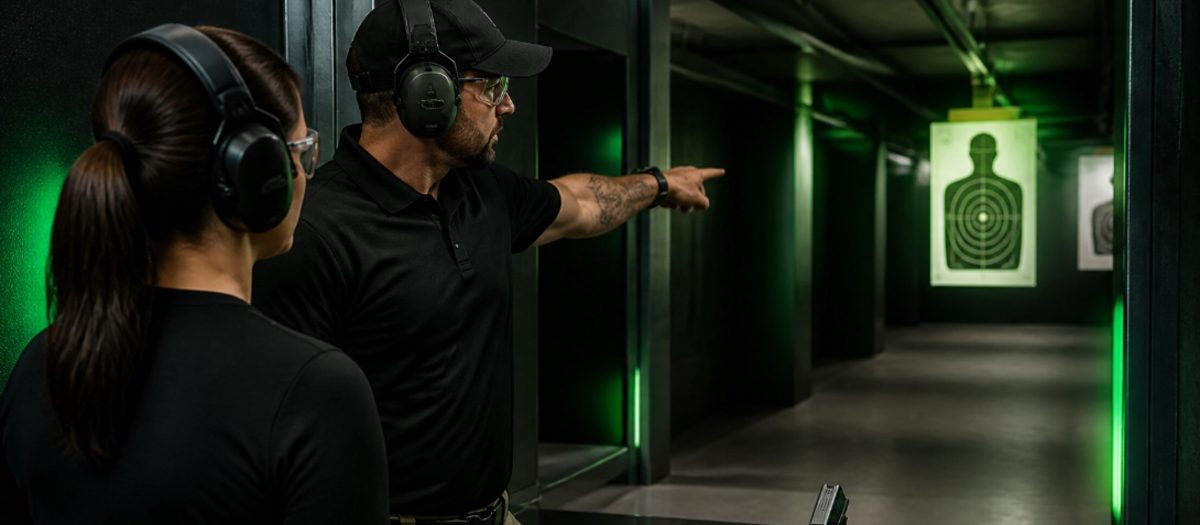
Many new gun owners can complete a qualification course but still struggle with inconsistent groups, anticipation, or poor trigger control. One-on-one coaching identifies those problems quickly.
We use a practical approach:
- Observe current habits.
- Correct one issue at a time.
- Use measurable drills.
- Explain why each adjustment matters.
- Build confidence without rushing the process.
This is also the right stage to evaluate equipment. A different grip size, optic, holster, or sight setup may improve performance, but equipment does not replace fundamentals. Training comes first.
Contact BRAVO DEFENSE to ask about current firearm training availability and pricing.
2. Concealed Carry Refinement
Connecticut does not issue a separate concealed carry permit. The State Permit to Carry Pistols and Revolvers covers both open and concealed carry, where legally permitted.
That legal authorization does not automatically create carry proficiency.
A concealed carry refinement course focuses on the skills and decisions involved in carrying responsibly every day. Depending on the curriculum, instruction may include:
- Safe holster selection
- Carry-position considerations
- Drawing safely from concealment
- Reholstering without unnecessary risk
- Clothing and access considerations
- Safe movement and positioning
- Reloading fundamentals
- Managing equipment under stress
- Verbal de-escalation and avoidance
- Connecticut carry restrictions and legal considerations
Training should always match the specific firearm, holster, and method of carry. Practicing with a different setup than the one used daily creates confusion and unreliable habits.
What to look for in a CT concealed carry class
Choose instruction that includes:
- Live-fire practice
- Safe, supervised holster work
- Clear discussion of Connecticut law
- Emphasis on avoidance and judgment
- A pace appropriate for the student’s experience
- Individual feedback instead of a one-size-fits-all lecture
Carry is a serious responsibility. The best training teaches when not to access or display a firearm just as clearly as it teaches mechanical skills.
Read our Connecticut concealed carry guide for general permit information, then contact us to discuss continued training.
3. Home Defense and Responsible Household Planning
Home defense training is about much more than selecting a firearm.
A responsible plan addresses storage, access, communication, family members, emergency services, and the legal consequences of using force. It should also include alternatives to confrontation whenever possible.
A home-defense course may cover:
- Secure firearm storage
- Authorized access and access denial
- Safe-room planning
- Family communication
- Emergency contact procedures
- Identifying occupants before taking action
- Avoiding unsafe searches
- Post-incident procedures
- Calling 911 and following dispatcher instructions
- Connecticut use-of-force considerations

Training for the whole household
A home-defense plan should not depend on one person remembering every detail under pressure. Household members should understand:
- Where to go during an emergency
- How to contact emergency services
- What areas of the home are safe
- How firearms are secured
- Who is authorized to access them
- What actions to avoid
For many households, the safest solution is prevention, secure storage, and communication: not searching for danger.
Important: Live-fire and scenario-based training must take place in an approved, controlled environment under qualified supervision. Do not attempt improvised tactical exercises inside a home.
At BRAVO DEFENSE, we help match training goals to experience level, household needs, and equipment. Call (959) 595-5135 to discuss available options.
4. Low-Light and Tactical Awareness Training
Most basic range practice takes place in bright, predictable conditions. Real environments are not always that simple.
Low-light training helps students understand how reduced visibility affects identification, movement, communication, and decision-making. It should emphasize safety and judgment: not theatrical drills.
A low-light course may address:
- Handheld flashlight techniques
- Weapon-mounted light considerations
- Identifying a target before any action
- Light and dark adaptation
- Safe movement in limited visibility
- Managing shadows and unknown areas
- Communication with other people
- Indoor and outdoor low-light awareness
- Legal and safety considerations
Low-light instruction is especially useful for gun owners who keep a firearm for defensive purposes, work unusual hours, or regularly move through poorly lit environments.
Why professional supervision matters
Low-light training introduces additional risks. Students need clear range procedures, controlled exercises, and careful instruction. A reputable instructor will establish strict safety rules before beginning and will never treat darkness as entertainment.
The emphasis should remain on:
- Positive identification
- Muzzle awareness
- Trigger-finger discipline
- Safe communication
- Slow, deliberate decisions
- Knowing when to disengage
Ask BRAVO DEFENSE about training options that address low-light awareness and practical defensive skills.
5. NRA Courses for Continued Skill Development
NRA courses provide a structured path for gun owners who want to expand beyond handgun permit training.
The NRA training catalog includes courses designed for different firearms and experience levels. Depending on goals and availability, relevant options may include:
- NRA Basics of Pistol Shooting
- NRA Basic Rifle Shooting
- NRA Basic Shotgun Shooting
- Marksmanship development programs
- Instructor-led or blended learning formats
NRA pistol instruction covers safe gun handling, pistol operation, ammunition, storage, shooting fundamentals, maintenance, and live-fire practice. Rifle and shotgun courses introduce the unique handling, operation, safety, and marksmanship requirements of long guns.

NRA training is not always the same as a Connecticut permit course
This distinction matters.
The Connecticut Department of Emergency Services and Public Protection states that applicants must complete an approved handgun safety course with live fire before applying for a pistol permit. The state specifically identifies the NRA Basic Pistol Course as an accepted baseline and notes that not every NRA-branded course satisfies the permit requirement.
Always verify that a course meets the current Connecticut requirement before registering for it as a permit course.
For long-gun owners and hunters, Connecticut may also require recognized firearms safety training for certain eligibility certificates or licenses. Review the current Connecticut firearms permit information and DEEP firearms training requirements before relying on a course for a state application.
Build a Long-Term Training Plan with BRAVO DEFENSE
A firearm permit is a credential. Competence is developed over time.
A practical progression may look like this:
- CT Pistol Permit Course : establish the required safety and live-fire foundation.
- Marksmanship Fundamentals : improve accuracy and consistency.
- Concealed Carry Refinement : train with the actual firearm and holster used for carry.
- Home Defense Planning : build a safe, lawful household response plan.
- Low-Light or Tactical Awareness : improve decision-making in reduced visibility.
- NRA Rifle, Shotgun, or Advanced Courses : expand skills across platforms.
At BRAVO DEFENSE, we provide personalized one-on-one instruction and practical firearm services for Connecticut gun owners. Our NRA-certified instructors support new shooters and experienced marksmen alike. We are also BBB accredited, reflecting our commitment to transparency, trust, and quality service.
We provide a relaxed environment without the pressure of a chain-store experience. Whether the next step involves training, firearm selection, a custom build, or gunsmithing support, we help plan the complete journey.
Ready to continue training?
- Review our firearm training and service options.
- Start with our CT Pistol Permit Course.
- Contact BRAVO DEFENSE to discuss individual instruction.
- Call or text (959) 595-5135.
Important disclaimer: This article provides general educational information. It is not legal advice and does not replace instruction from a qualified instructor or guidance from Connecticut authorities. Firearm laws, course requirements, fees, and restricted locations can change. Confirm current requirements with the Connecticut DESPP, DEEP, local authorities, and a qualified firearms instructor before applying for a permit, carrying, hunting, or purchasing a firearm.
BRAVO DEFENSE, LLC
Custom Firearm Solutions in Southington, Connecticut
Personalized firearm sales, training, gunsmithing, Cerakote, NFA services, transfers, and trade-ins.
Visit www.bravodefensellc.com or call (959) 595-5135 to get started.